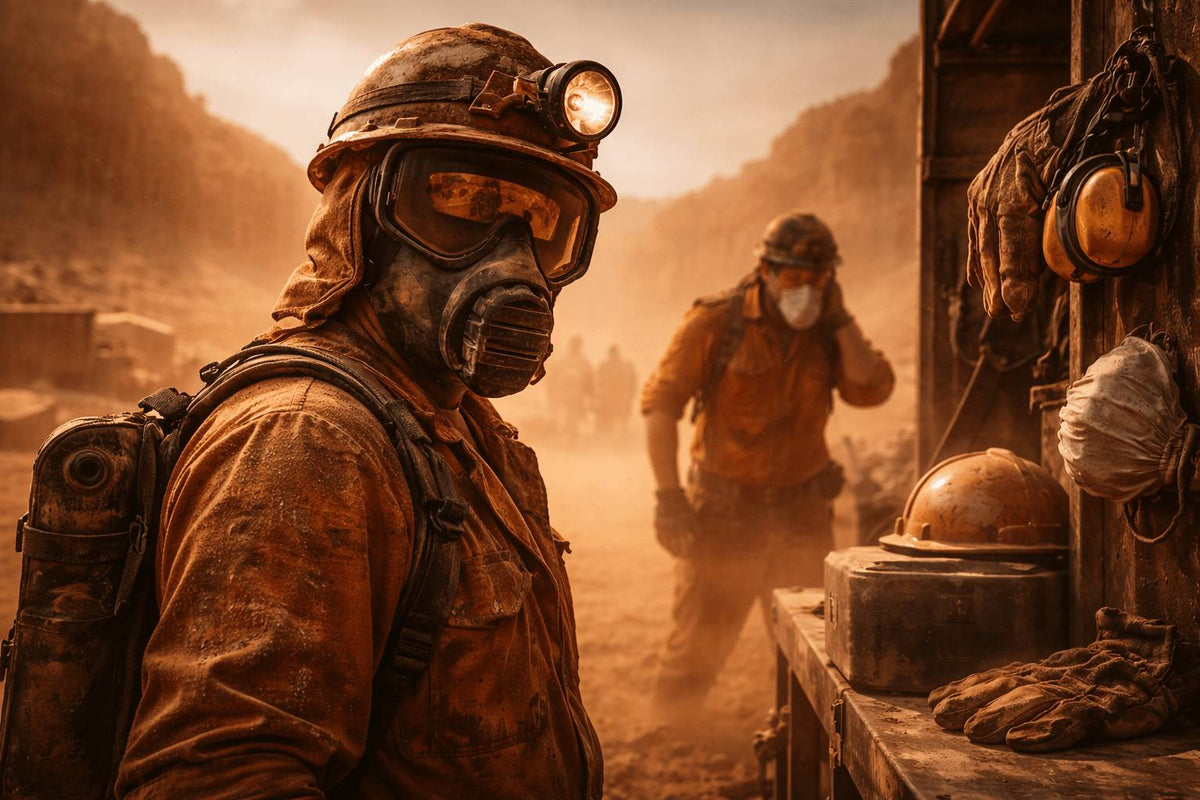
The Risk You Don’t See Until It’s Too Late — Normalisation on Site
The Risk You Don’t See Until It’s Too Late — Normalisation on Site
We’ve talked about hydration.
We’ve talked about fatigue.
We’ve talked about how small things stack.
Now let’s talk about what ties it all together — and why the same incidents keep happening, even when everyone “knows better.”
This one’s about normalisation of risk.
Or in plain site language:
“We’ve always done it this way… and nothing’s happened.”
What’s Starting to Show Up Across Industry
If you’ve been keeping an eye on recent mining safety discussions (AMSJ, SafetyCulture, the usual suspects), there’s a pattern sitting underneath a lot of incidents:
Not catastrophic failure.
Not total system breakdown.
Just… drift.
• Controls slowly not followed
• PPE used inconsistently
• Shortcuts becoming standard
• “Near enough” becoming acceptable
And over time, that becomes the new normal.
The Dangerous Bit — It Feels Safe
Here’s what makes this risk so hard to spot:
Nothing goes wrong straight away.
So people assume it’s fine.
That glove you didn’t grab
That water you skipped
That quick job without full PPE
It works… until it doesn’t.
This is exactly how systems drift — not through bad people, but through small decisions that feel reasonable in the moment.
Why It Happens (And Why It Keeps Happening)
Let’s be real for a second — no one wakes up thinking:
“Today I’m going to ignore safety.”
But they do think:
• “I’ll just be quick”
• “It’s only a small job”
• “I’ll grab it next time”
And this is where your earlier blogs tie in:
- When PPE isn’t easy to access → it gets skipped
- When systems rely on memory → people forget
- When hydration drops → decision-making drops
None of these are failures on their own.
But stack them?
That’s where incidents start.
Normalisation + Fatigue + Heat = Quiet Risk
This is the part most reports don’t spell out clearly enough.
These risks don’t act alone.
They combine:
• Heat → slows thinking
• Fatigue → reduces awareness
• Dehydration → impacts judgment
• Normalisation → lowers standards
Individually manageable.
Together? Dangerous.
And the scary bit?
You won’t see it coming.
“Human Error” Isn’t the Root Cause
A lot of reports still land on the same conclusion:
Human error.
But that’s not the full story.
People aren’t the problem — the system is.
If the system allows:
• PPE to be out of reach
• Water to be inconsistent
• shortcuts to go unchecked
Then those behaviours aren’t mistakes…
They’re predictable.
So What Actually Fixes It?
Not more rules.
Not more paperwork.
Not another toolbox talk that everyone forgets by smoko.
You fix it by tightening the system where it matters:
1. Remove Friction
If it’s hard to do the right thing — people won’t do it consistently.
2. Make Safety Visible
Out of sight = out of mind.
3. Build It Into Habit
The strongest controls are the ones people don’t have to think about.
Where This Comes Back to Real Work (Not Theory)
This is exactly why design matters.
Not flashy design.
Functional design.
Gear that:
• moves with you
• stays within reach
• becomes part of how you work
Because when safety is built into the job — not added on top — behaviour changes without forcing it.
That’s not theory.
That’s how humans actually operate.
The Thirsty Squirrel Way (Yeah, We’re Going There)
We’ve said it before, and it’s worth repeating:
Safety should fit the flow of work — not fight it.
That’s the whole point.
One bottle.
Your water.
Your gear.
Right there.
No:
• walking back to the ute
• “I’ll grab it in a sec”
• relying on memory
Just a system that quietly removes the excuses.
Final Thought — This Is Where Incidents Actually Start
Not with a bang.
Not with a big failure.
But with:
“Yeah… she’ll be right.”
And if you’re honest — every site has it.
The goal isn’t to eliminate people making decisions.
The goal is to design a system where the safest option is also the easiest one.
That’s how you stop drift.
That’s how you stop stacking risk.
And that’s how you stop the incident… before it even gets a chance to start.
Call to Action (Subtle but Effective)
If your current system still relies on:
- remembering
- reminding
- or hoping people do the right thing
…it’s probably time to rethink how safety shows up on site.
👉 Check out how we’re making safety second nature:
www.thirstysquirrel.com.au


