Why Good Workers Break Safety Rules
21 July 2026
Why Good Workers Break Safety Rules
When an incident happens, one of the first questions often asked is:
"Why didn't they follow the procedure?"
It's a fair question.
But it might be the wrong one.
The uncomfortable truth is that most safety incidents don't involve reckless workers who don't care. They involve experienced, capable people trying to get their job done.
The problem isn't usually attitude.
It's human behaviour.
Nobody Comes to Work Wanting to Get Hurt
Think about the best operator, fitter or supervisor you've worked with.
They're experienced.
They're skilled.
They know the risks.
Yet even the best workers have taken shortcuts, forgotten PPE, skipped a step or thought, "It'll only take a second."
Not because they don't care.
Because they're human.
We Naturally Choose the Easier Option
Human beings are wired to conserve effort.
Every day we make thousands of decisions, and our brains constantly look for the easiest path.
It's why people park closer to the entrance.
Why we use shortcuts on our phones.
Why we leave things where we'll need them next.
The workplace is no different.
If the safest option is also the easiest option, most people will choose it.
If the safest option is slower, harder or less convenient, the temptation to take shortcuts grows.
Production Pressure Is Real
Every workplace has competing priorities.
Finish the job.
Keep production moving.
Help your mate.
Meet the deadline.
Most shortcuts aren't made because someone doesn't care about safety.
They're made because someone believes they're saving time.
The irony is that many of these shortcuts end up costing far more time through incidents, investigations, downtime and injuries.
Stop Relying on Memory
How often do we expect workers to remember everything?
Their gloves.
Their glasses.
Their hearing protection.
Their lock.
Their tag.
Their sunscreen.
Their permits.
Their radio.
Their keys.
Then we're surprised when something gets left behind.
Good systems don't rely on memory.
They rely on design.
Remove the Friction
Every unnecessary barrier increases the chance that someone will take a shortcut.
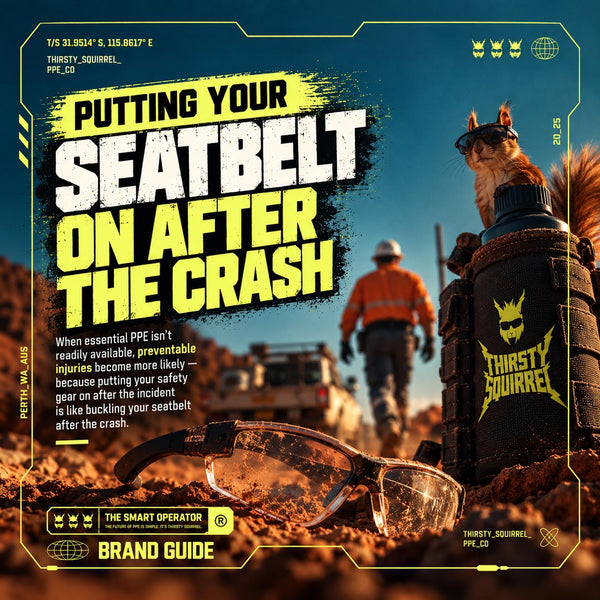
If workers have to walk back to the ute to get their glasses...
Some won't.
If hearing protection is in the crib room...
Some will say they'll grab it later.
If lock-out equipment isn't immediately available...
Someone may convince themselves they'll only be working for a minute.
The goal isn't to make workers try harder.
The goal is to make the right decision easier.
Designing for Human Behaviour
This is where good safety systems make the difference.
Rather than expecting perfect behaviour every time, they recognise that people forget, become distracted and work under pressure.
Instead of asking workers to remember where everything is, we should ask:
"How can we make this easier?"
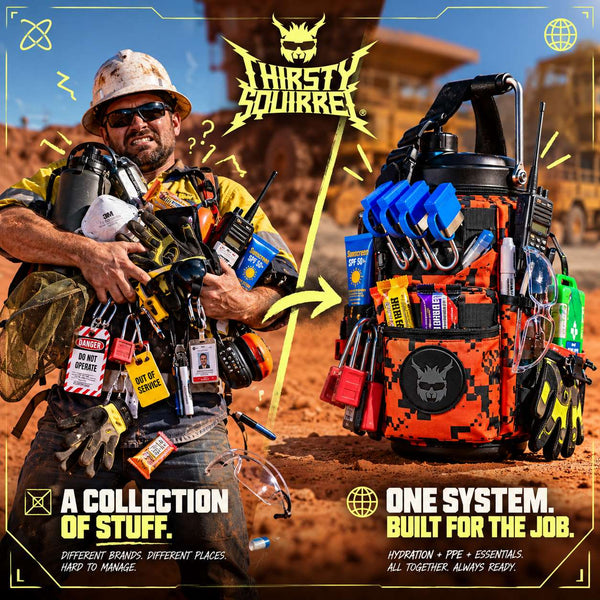
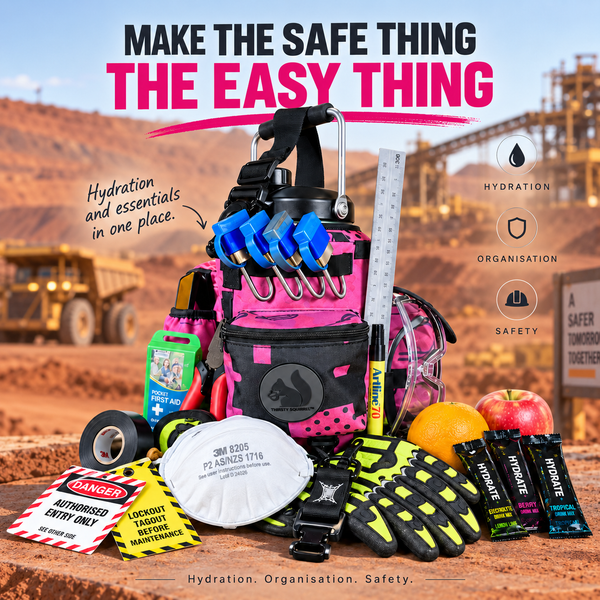
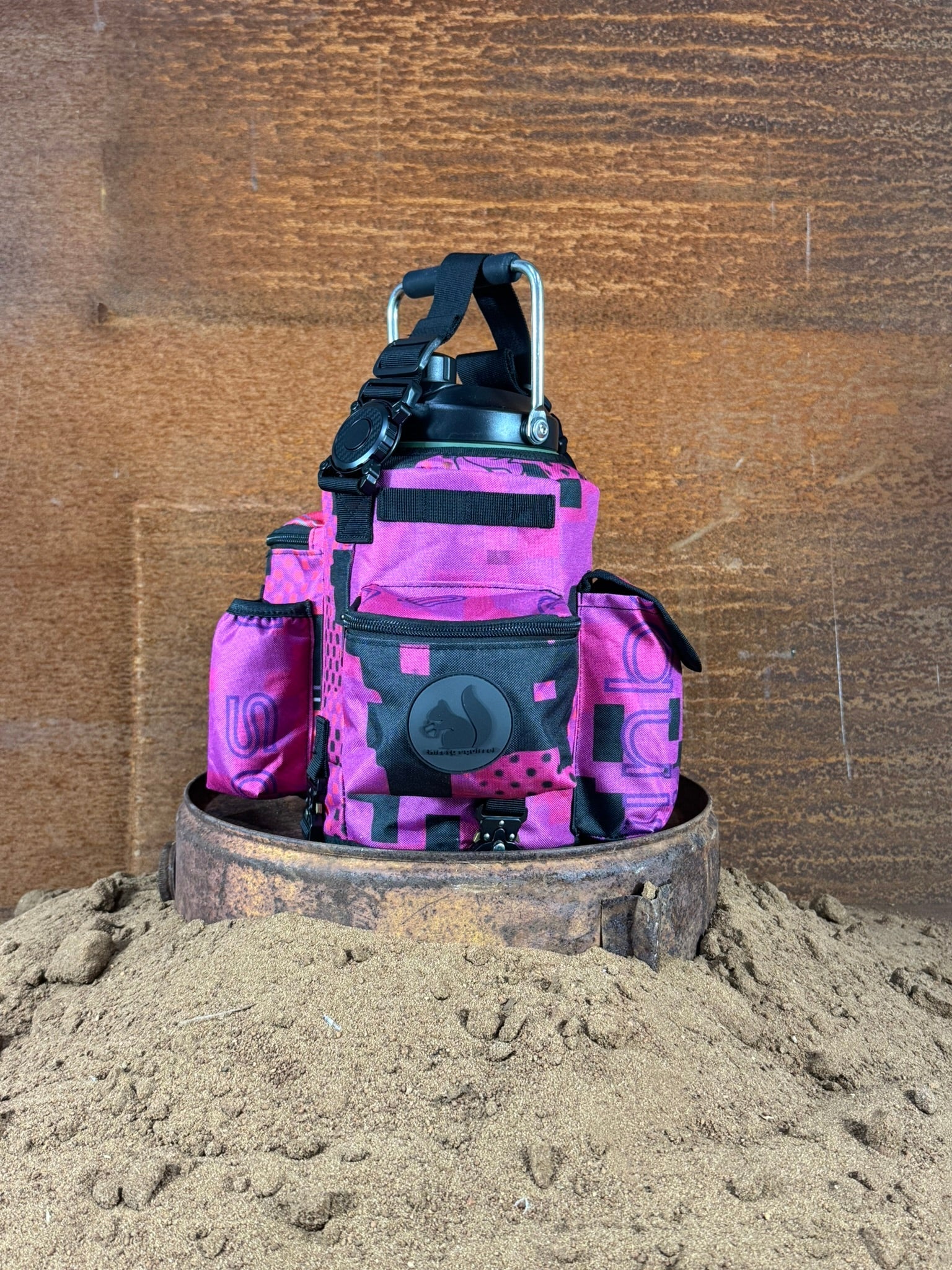
That's the thinking behind the Thirsty Squirrel Bottle Cover.
Almost every worker already carries a water bottle.
By turning that bottle into a personal PPE station, your everyday essentials stay together and within arm's reach.
It's not about carrying more.
It's about searching less.
Better Systems Create Better Behaviour
Safety culture isn't built by telling people to care more.
It's built by designing workplaces where the safest choice is also the easiest choice.
When PPE is organised...
When equipment is always close by...
When workers spend less time searching...
Compliance improves naturally.
Because good workers don't need more reminders.
They need better systems.
And sometimes, the biggest improvements don't come from another procedure.
They come from removing one small frustration that workers deal with every single day.

Shop the gear from this guide
Browse the Thirsty Squirrel products mentioned in this article.