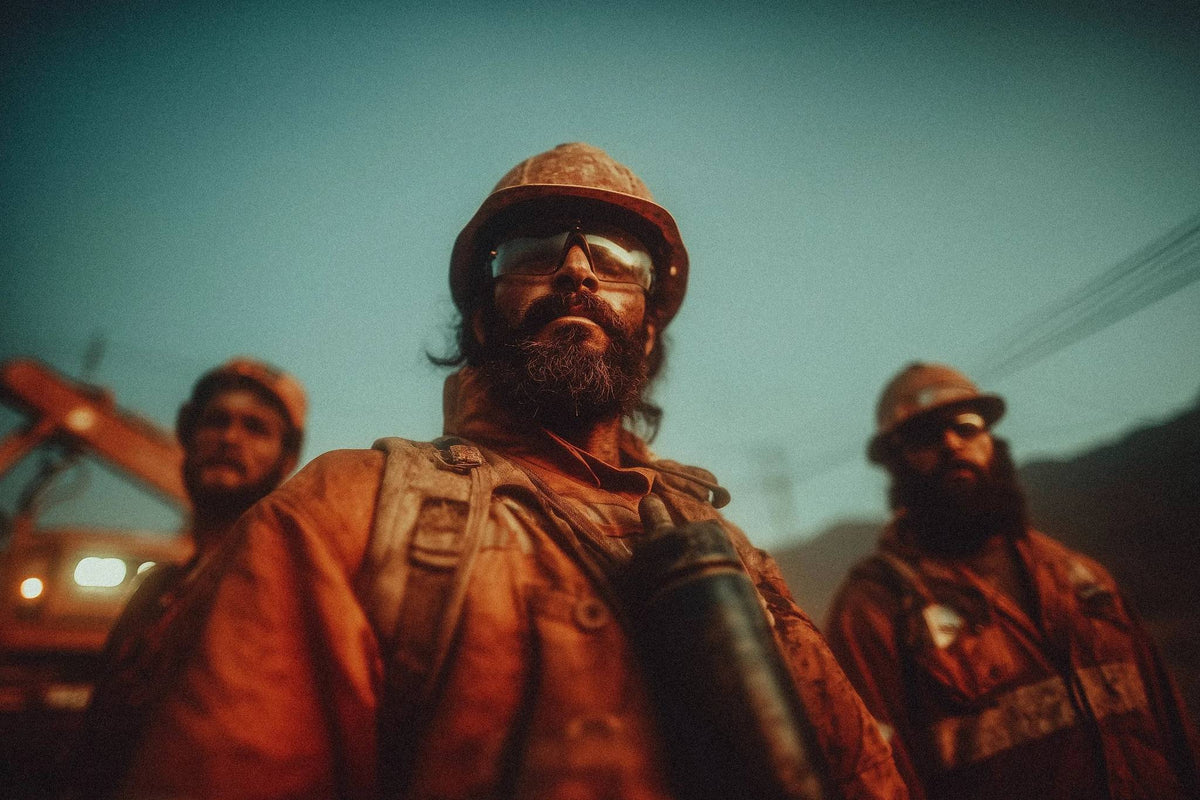
Hydration Is PPE for Your Brain: Why Water Is a Safety Control
When people talk about PPE, they usually mean gloves, glasses, helmets and boots.
Rarely do they talk about water.
Yet dehydration is one of the most common, least visible risk factors on Australian worksites — and one of the most dangerous. Not because it causes dramatic incidents, but because it quietly erodes judgment, attention, and decision-making long before anyone realises what’s happening.
Hydration isn’t wellness. It’s risk control.
Dehydration Starts Affecting Safety Before You Feel It
One of the most dangerous myths about dehydration is that you’ll “feel it” before it matters.
Research shows the opposite.
Even mild dehydration — as little as 1–2% body weight loss — has been shown to impair cognitive performance, attention, reaction time and short-term memory. These are the exact functions workers rely on to judge distances, assess hazards, follow procedures, and respond to change.
Lieberman (2007) demonstrated that dehydration affects mental performance before physical symptoms become obvious. In other words, by the time someone feels thirsty, their judgment may already be compromised.
On a worksite, that matters.
Heat, Fatigue and Compounding Risk
Hydration rarely acts alone.
In hot environments, dehydration combines with heat stress, physical fatigue and long shifts to compound risk. Workers become slower to react, more likely to take shortcuts, and less able to reassess when conditions change.
Racinais et al. (2015) found that heat stress significantly degrades occupational performance, particularly in tasks requiring sustained attention and decision-making.
This isn’t about comfort. It’s about error prevention.
Poor hydration increases the likelihood of:
• lapses in attention
• misjudged movements
• delayed reactions
• risk-taking behaviour
Hydration is Upstream PPE
Traditional PPE protects against physical hazards after an event occurs.
Hydration works upstream — protecting the cognitive system that prevents incidents from happening in the first place.
From that perspective, water is PPE for the brain.
Safe Work Australia recognises dehydration and heat stress as major contributors to workplace incidents, particularly in outdoor and high-temperature environments. Yet hydration is often treated as a personal responsibility rather than a designed safety control.
That’s a mistake.
Designing Hydration Into the Workday
If hydration is critical to safety, it should be designed into the workday — not left to chance.
But just like PPE, hydration suffers when it’s inconvenient.
Bottles get left behind. They’re stored out of reach. They run dry and don’t get refilled.
And when hydration breaks down, safety follows.
Design matters here too.
When water is:
• visible
• accessible
• easy to carry
• part of normal movement
people drink more — consistently, not just at breaks.
Where Thirsty Squirrel Fits
Thirsty Squirrel treats hydration as what it is: a core safety control.
By keeping water with the worker at all times — and integrating PPE storage into the same system — hydration becomes habitual, not optional.
No reminders.
No reliance on memory.
No extra steps.
Just a system that supports safe cognitive performance throughout the shift.
Hydration supports decision-making.
Decision-making supports safety.
It’s that simple.
Stop Treating Water Like an Accessory
You wouldn’t send someone onto site without gloves or glasses.
So why treat hydration as optional?
Water doesn’t just keep people comfortable.
It keeps them sharp.
And sharp workers make safer decisions.
If we’re serious about safety, hydration needs to be treated like PPE — designed, prioritised, and kept close.
Because the most important safety system on site isn’t a barrier or a form.
It’s the human brain.
References & Further Reading
Lieberman, H.R. (2007). Hydration and cognition: A critical review. Nutrition.
https://doi.org/10.1016/j.nut.2006.07.003
Racinais, S. et al. (2015). Heat stress and occupational performance. British Journal of Sports Medicine.
https://doi.org/10.1136/bjsports-2014-093885
Safe Work Australia. Heat stress.
https://www.safeworkaustralia.gov.au/safety-topic/hazards/heat


