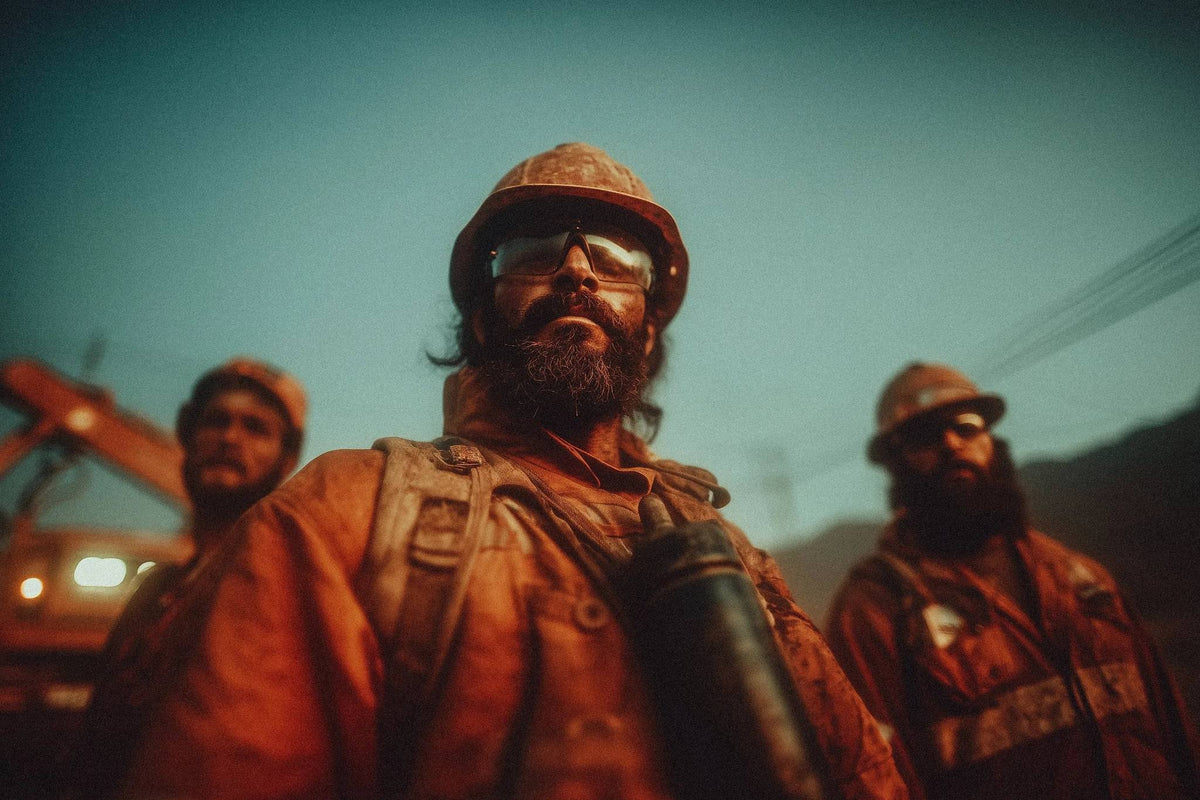
Pride, Identity and PPE: Why People Wear Gear They Respect
PPE isn’t just equipment. Whether we like it or not, it’s a statement.
On every worksite, gear sends signals — about professionalism, competence, and care. Some PPE gets worn proudly. Other gear gets stuffed into lockers, left in utes, or quietly “forgotten.”
That difference is rarely about safety knowledge. It’s about identity.
People don’t just use PPE. They identify with it.
Identity Drives Behaviour
Decades of research in organisational psychology show that people align their behaviour with how they see themselves and how they want to be seen by others. This is known as social identity theory.
When workers identify as professionals — as capable operators who do the job properly — they behave differently. They plan better, communicate better, and take more care.
PPE plays a role in that identity.
Gear that feels cheap, awkward, or poorly thought-out subconsciously signals that safety is an afterthought. Gear that looks purposeful and well-designed reinforces pride and ownership.
Ashforth and Mael (1989) showed that people adopt behaviours consistent with the groups they identify with. If PPE aligns with a positive professional identity, compliance increases naturally.
Why “Daggy” PPE Gets Ditched
No one likes feeling embarrassed by their gear.
This isn’t vanity — it’s human nature. People avoid things that make them feel awkward, incompetent, or out of place. PPE that looks uncomfortable, outdated, or poorly designed creates subtle resistance.
Research into safety climate shows that workers are more likely to engage in safe behaviour when they feel respected and valued by their organisation (Neal & Griffin, 2006). PPE is part of that message.
If the gear looks like it was chosen without thought for the people wearing it, that message is received — loud and clear.
Pride Improves Consistency
Consistency is where safety is won or lost.
Most people will wear PPE when they’re being watched. Pride determines whether they wear it when they’re not.
When workers feel good about their gear, they keep it close. They look after it. They use it properly — not because they have to, but because it feels right.
Hofmann et al. (2003) found strong links between organisational support, safety culture, and discretionary safety behaviour — the kind that happens without supervision.
That discretionary behaviour is what separates compliance from care.
Design Is Behavioural
Design isn’t cosmetic. It’s behavioural.
Every design choice either encourages or discourages use. Weight, fit, layout, durability, and appearance all influence whether PPE becomes part of someone’s routine or something they tolerate.
Good design reduces resistance.
When PPE feels intentional — designed by people who understand the job — it earns respect. And respected gear gets used.
Where Thirsty Squirrel Fits
Thirsty Squirrel wasn’t designed to be flashy. It was designed to look like it belongs on site.
Rugged. Purposeful. Practical.
It signals preparation and professionalism, not novelty.
By integrating PPE storage into a bottle workers already carry, Thirsty Squirrel reinforces a simple message: this is gear for people who think ahead and take pride in how they work.
That pride matters.
PPE That People Want to Carry
Safety systems often assume people need to be forced into compliance.
The evidence suggests the opposite.
When PPE supports identity, pride, and professionalism, people choose it willingly. They keep it with them. They use it consistently.
That’s not psychology fluff. It’s how humans work.
Respect the worker. Respect the work. Design gear that reflects both.
That’s how PPE stops feeling like an obligation — and starts feeling like part of who you are.
References & Further Reading
Ashforth, B.E. & Mael, F. (1989). Social identity theory and the organization. Academy of Management Review.
https://doi.org/10.5465/amr.1989.4278999
Neal, A. & Griffin, M.A. (2006). A study of the lagged relationships among safety climate, safety motivation and safety behaviour. Journal of Applied Psychology.
https://doi.org/10.1016/j.jap.2006.02.003
Hofmann, D.A., Morgeson, F.P., & Gerras, S.J. (2003). Climate as a moderator of the relationship between leader–member exchange and content-specific citizenship. Academy of Management Journal.
https://doi.org/10.2307/30040648


