Why Do We Make PPE Harder to Access Than a Seatbelt?
29 July 2026
Imagine this.
You're about to drive to work.
You jump into your vehicle, close the door and reach for your seatbelt.
Except... there isn't one.
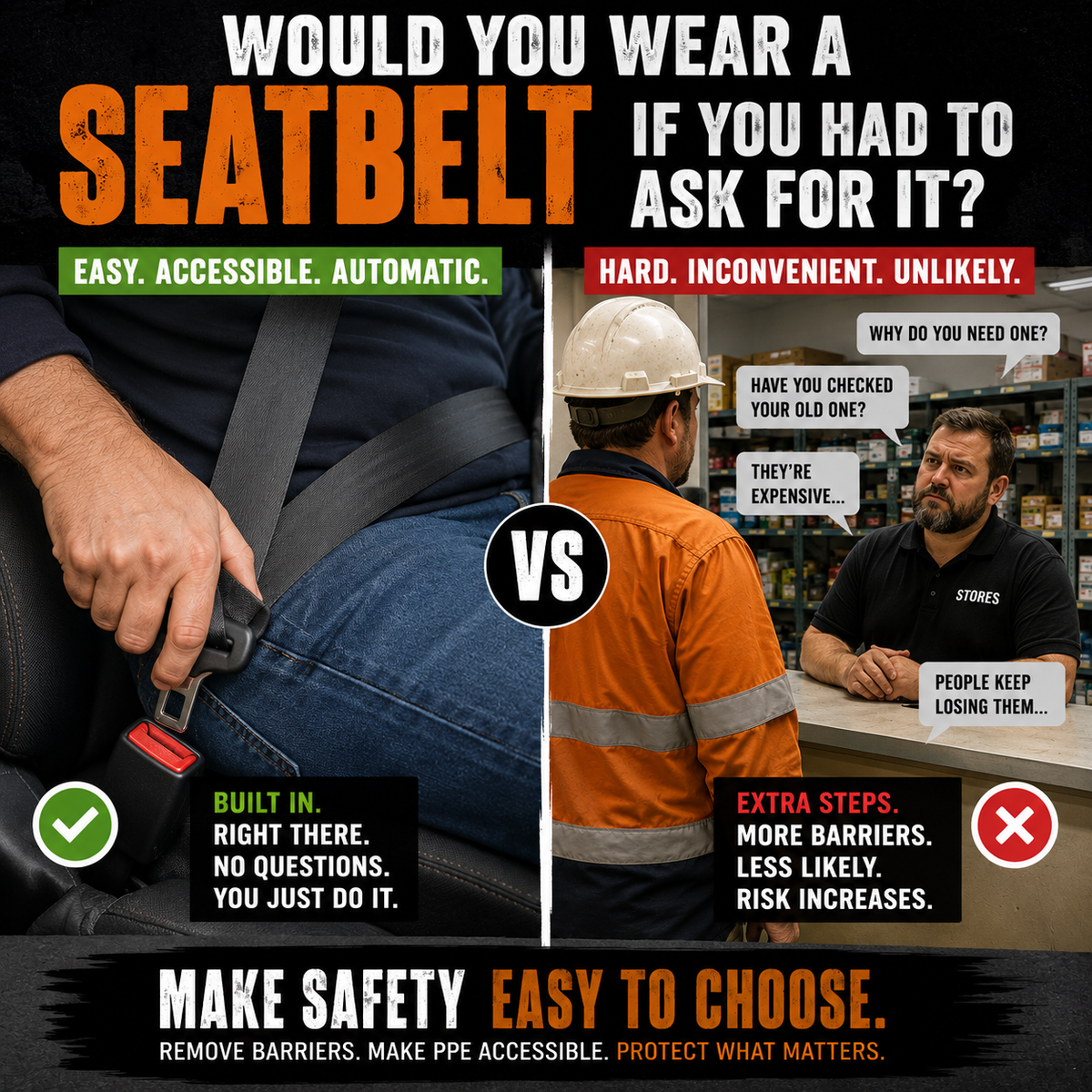
Instead, you have to walk over to the stores department.
You wait while someone finishes what they're doing.
They ask why you need one.
How long you'll need it.
Whether you really need a new one.
Maybe they remind you that people keep losing them.
Maybe they tell you they're expensive.
Maybe they ask if you've checked your old one first.
Eventually, they hand one over.
Now ask yourself a simple question.
Would you wear a seatbelt every single time you drove?
Probably not.
Not because you don't believe seatbelts save lives.
Not because you don't care about safety.
Because we've added so much friction to something that should be effortless.
The Easier Something Is, the More Likely We Are to Do It
Human behaviour is remarkably predictable.
The easier a task is, the more consistently we perform it.
The harder it becomes—even by a few extra steps—the less likely we are to follow through.
It's why people use contactless payments instead of cash.
Why streaming replaced DVDs.
Why we carry smartphones instead of paper maps.
Convenience changes behaviour.
Safety is no different.
PPE Should Be Easy to Access
In many workplaces, obtaining PPE can involve finding the right person, visiting the stores, completing paperwork or justifying why another pair is needed.
None of these steps are individually difficult.
But together, they create friction.
That friction has consequences.
A worker who's left their hearing protection in the ute may decide they'll "only be here for a minute."
Someone who scratched their safety glasses yesterday may keep wearing them because replacing them feels like too much effort.
A damaged pair of gloves gets one more shift.
A disposable dust mask gets used again.
Not because people don't care.
Because humans naturally take the path of least resistance.
Every Barrier Is a Risk Control Waiting to Fail
Risk management isn't only about identifying hazards.
It's about making the right decision the easiest decision.
Every unnecessary barrier between a worker and the equipment they need increases the chance they'll work without it.
We don't make people justify using a fire extinguisher during an emergency.
We don't ask them to fill out a form before pressing an emergency stop.
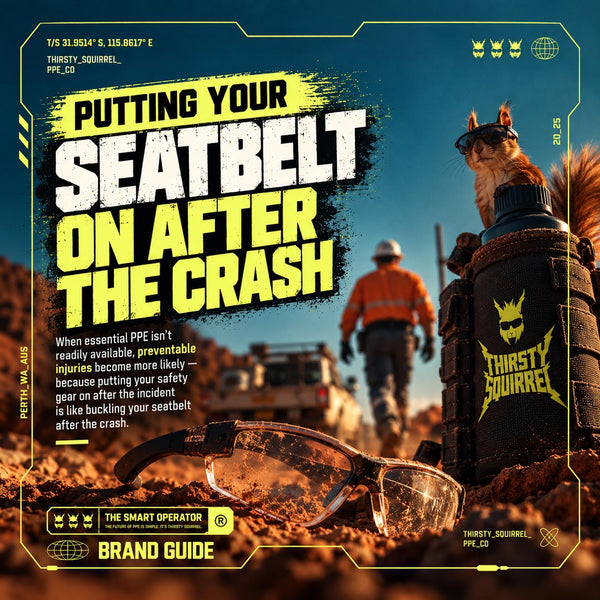
And we certainly wouldn't expect someone to collect a seatbelt from the stores before driving a vehicle.
So why do we sometimes make essential PPE harder to access than it needs to be?
Making Safety Convenient
Removing barriers doesn't mean wasting PPE.
It doesn't mean poor stock control.
It means designing systems that recognise how people actually behave.
When workers have immediate access to the equipment they need, they're far more likely to use it consistently.
That's good for the worker.
It's good for supervisors.
And it's good for the business.
Removing Friction, Not Responsibility
At Thirsty Squirrel, we believe one of the simplest ways to improve PPE compliance is to reduce the everyday barriers that get in the way.
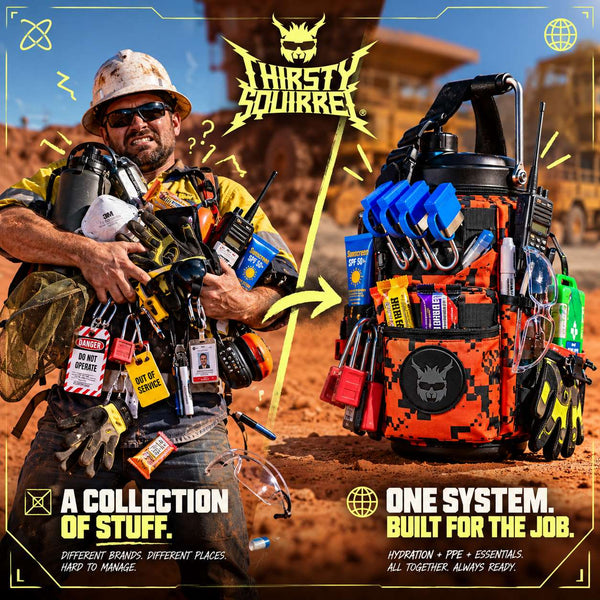
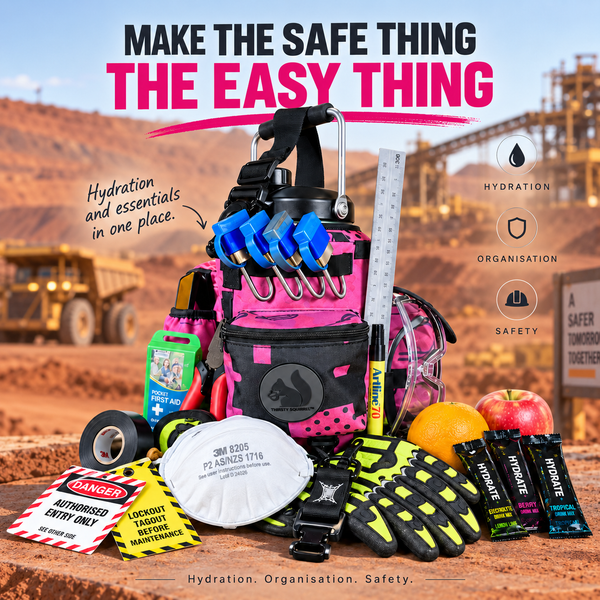
That's why we created the OG Cover and MOLLE Cover. Instead of leaving essential PPE in a vehicle, toolbox or stores, workers can keep frequently used items like safety glasses, hearing protection, gloves and lockout equipment organised and within easy reach on the water bottle they're already carrying throughout the day.
It doesn't replace training.
It doesn't replace supervision.
It simply removes one more excuse not to use the equipment that's already been provided.
https://thirstysquirrel.com.au/collections/thirsty-squirrel-og-water-bottle-cover

The Takeaway
When workers don't use PPE, it's easy to assume they don't care.
Sometimes that's true.
More often, it's because the system has made doing the right thing just a little bit harder than it needed to be.
Every unnecessary step.
Every delay.
Every awkward conversation.
Every extra barrier.
They all increase the chance that someone decides, "I'll just do this one job without it."
The best safety systems don't rely on perfect people.
They remove friction, make safe choices easier and recognise a simple truth:
If we want people to wear their PPE, we should make getting it almost as effortless as reaching for a seatbelt.

Shop the gear from this guide
Browse the Thirsty Squirrel products mentioned in this article.