The Critical Role of Supervisors in Workplace Safety
05 August 2026
When people think about workplace safety, they often picture policies, procedures, risk assessments and toolbox talks.
They're all important.
But none of them keep people safe on their own.
Safety comes to life through supervisors.
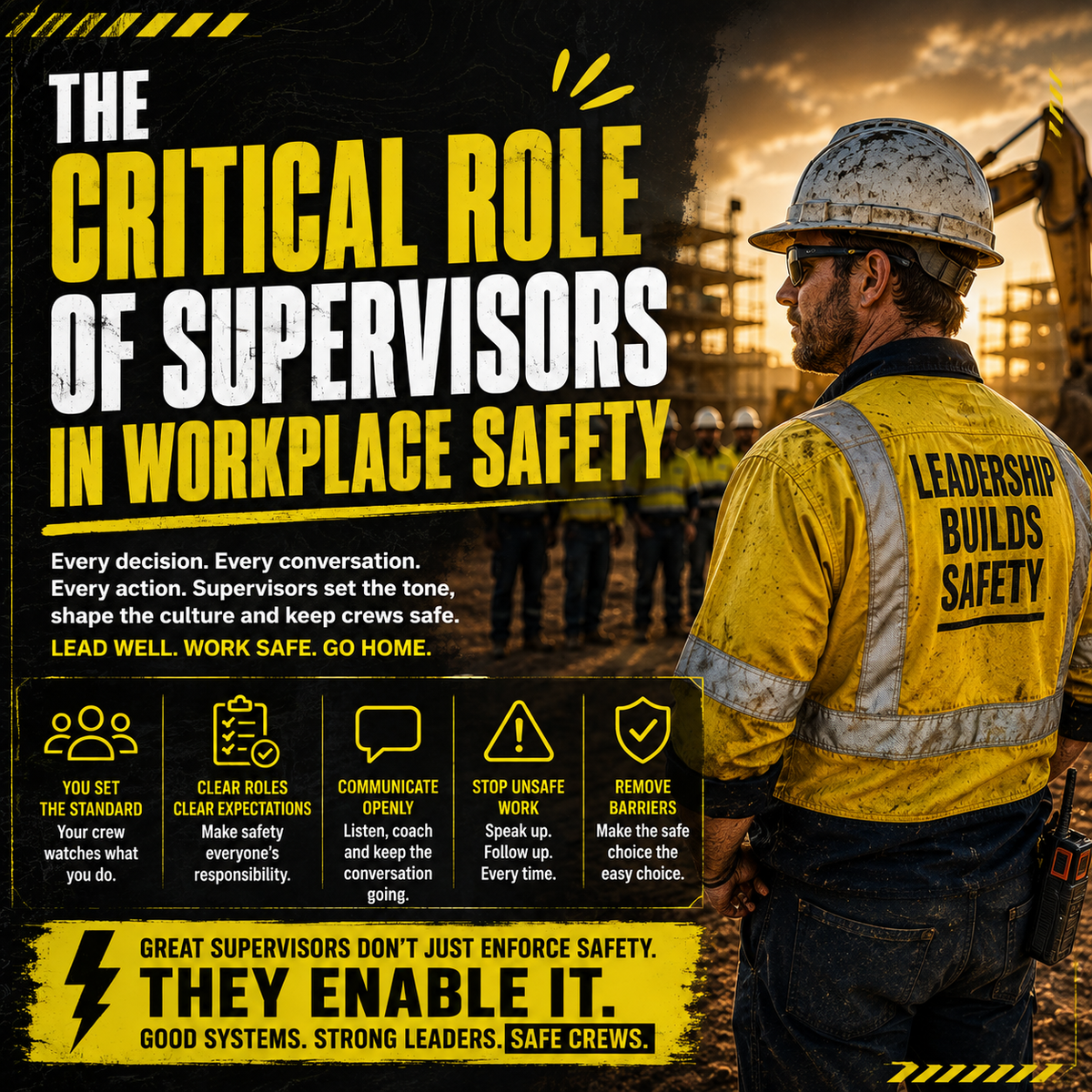
Every day, supervisors make hundreds of decisions that influence how work gets done. They set expectations, coach workers, correct unsafe behaviours and, perhaps most importantly, demonstrate what "good" looks like. Whether they realise it or not, they're shaping the safety culture of their crew every shift.
More Than Just Getting the Job Done
A supervisor's role isn't just to meet production targets or keep a project on schedule.
Under Australia's Work Health and Safety (WHS) framework, supervisors play a critical part in ensuring work is carried out safely. While legal duties vary between workplaces and positions, supervisors are often responsible for providing instruction, monitoring work practices, ensuring workers follow procedures, and escalating hazards or issues they can't resolve themselves.
Put simply, they're the link between the company's safety systems and what actually happens on site.
Workers Watch What Leaders Do
Safety culture isn't built by posters on the lunchroom wall.
It's built by the actions workers see every day.
If a supervisor wears the required PPE, stops to reassess changing conditions and speaks up about unsafe work, the crew notices.
If shortcuts are ignored because "we're only doing a quick job," the crew notices that too.
People are far more likely to copy behaviour than they are to memorise procedures.
That's why leadership is one of the strongest safety controls any organisation has.
Remove the Barriers
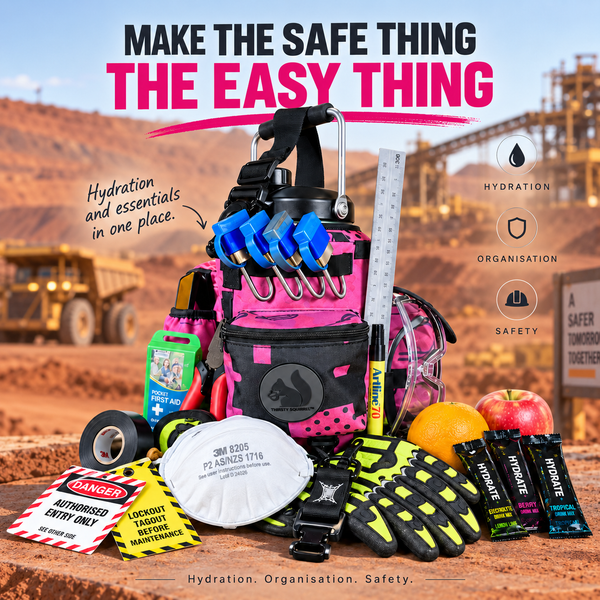
One of the biggest opportunities for supervisors isn't writing more paperwork—it's removing barriers that make safe work harder.
Ask yourself:
Do workers have the equipment they need when they need it?
Is PPE easy to access?
Are our controls practical, or do they create unnecessary friction?
When the safe option is also the easiest option, compliance becomes far more consistent.
Final Thought
Good supervisors don't just enforce safety—they enable it.
They understand that incidents rarely happen because people wake up wanting to make poor decisions. More often, they're the result of rushed work, competing priorities or systems that make the safe way harder than it needs to be.
The best leaders don't rely on common sense alone.
They build environments where doing the right thing is the easiest thing to do.
Because great safety isn't measured by the number of rules you write.
It's measured by how easy you've made it for your people to work safely.
Further Reading
Thirsty Squirrel
Work Health & Safety
WorkSafe WA – Your rights and responsibilities (Managers and Supervisors)
WorkSafe WA – Managers and Supervisors Responsibilities

Shop the gear from this guide
Browse the Thirsty Squirrel products mentioned in this article.