We've Standardised the Rules. Not the Experience.
22 October 2026
Dozens of products. Multiple manufacturers. One worker. Almost no thought about how it all comes together.
Estimated reading time: 4 minutes
Think about the average worker heading out onto a mine site or construction project.
Before they've even picked up a tool, they've already got a fair bit of gear to manage.
A hard hat, safety glasses, gloves, hearing protection, safety boots and high-vis clothing. Depending on the work, add respiratory protection, a face shield or other task-specific PPE.
Then there's the rest of the kit.
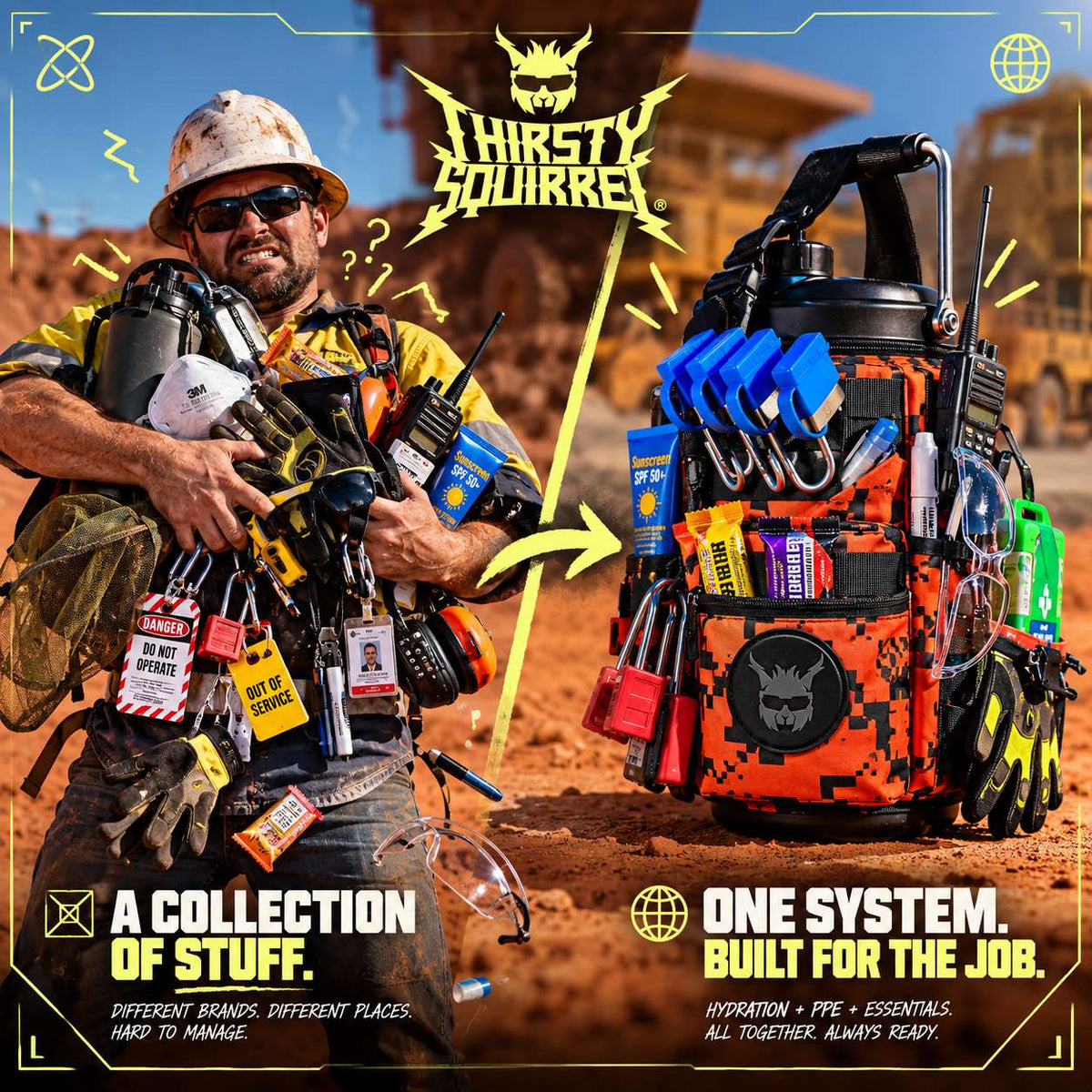
Personal isolation locks, danger tags, identification cards, a radio, gas monitor, notebook, pens, sunscreen, lip balm, a water bottle, hydration supplements, and whatever else the job or site requires.
Different products. Different manufacturers. Different shapes, sizes, storage requirements and ways of being carried.
And somehow, one person is expected to keep everything organised, accessible, serviceable and ready to use.
We've become very good at developing individual pieces of safety equipment. But have we spent enough time thinking about how they all work together?
One Worker. How Many Different Brands?
Here's an interesting exercise.
Take everything a worker is expected to wear, carry or have immediately available during their shift.
Lay it all out on a table.
Now count the items.
Then count the different manufacturers.
Finally, look at how many of those products have been designed to work together as a complete system.
There's a reasonable chance you'll find a collection of individually useful products, with very little consideration given to how the worker is supposed to manage them collectively.
We've got companies specialising in gloves, glasses, helmets, hearing protection, respiratory equipment, isolation equipment, electronics and workwear.
Each manufacturer concentrates on improving its own product, and fair enough.
But the worker doesn't experience those products individually.
The worker experiences all of them, at the same time.
And that's where things get interesting.
We've Standardised the Rules. Not the Experience.
We've got standards for safety glasses, helmets, respiratory protection and plenty of other protective equipment.
We've got procedures explaining when and how to use them.
We specify the appropriate protection, train people, conduct inspections and monitor compliance.
Yet the practical question of how workers manage all this equipment often receives far less attention.
Where do the spare gloves go?
Where do you put your glasses when you need to change to another type of eye protection?
How do you keep your earplugs clean and accessible?
Where do you keep your isolation equipment so it's secure, identifiable and available when required?
What about your sunscreen, lip balm, hydration supplies and everything else needed throughout the shift?
The answer is often some combination of pockets, clips, bags, lockers, vehicles and a bit of worker ingenuity.
We've made improvements in how certain PPE items fit together. Helmet-mounted hearing protection is one example.
But compatibility between individual products isn't the same as designing an integrated system around the worker's entire day.
Then We Wonder Why Things Get Left Behind.
We've all heard it.
"Where are your gloves?"
"Left them in the ute."
"Where's your hearing protection?"
"Must have fallen out of my pocket."
"Where's your water bottle?"
"Back at the crib room."
It's easy to respond by telling someone to be more organised, take responsibility or comply with the rules.
And yes, workers have responsibilities.
But maybe we should be asking another question.
Have we actually made it practical for workers to manage everything we're expecting them to use?
When equipment is awkward to carry, difficult to access or constantly getting in the way, we're introducing friction into the very behaviours we're trying to encourage.
That doesn't excuse non-compliance.
It does mean there's an opportunity to design better solutions instead of relying entirely on reminders, supervision and discipline.
What Would an Integrated System Look Like?
Imagine if we approached everyday safety equipment the same way we approach a well-designed tool system.
Equipment would be organised around the worker and the task, rather than simply purchased as individual products.
Frequently used items would have a practical, consistent location.
Protective equipment would be compatible, accessible and stored appropriately.
There would be fewer loose items, fewer unnecessary trips back to the vehicle and less rummaging through pockets trying to find what you need.
We'd consider storage and accessibility when selecting equipment, not as an afterthought once it had already been issued.
And importantly, the system would be developed with the people who actually use it.
That doesn't mean every item should attach to the same piece of equipment. Some products need specific storage, separation, cleaning or security arrangements. Nor does better PPE organisation replace eliminating hazards or implementing higher-order risk controls.
It's about designing the complete working experience instead of treating every product as an isolated purchase.
This Is Why We Started Thirsty Squirrel.
At Thirsty Squirrel, we asked ourselves a pretty simple question.
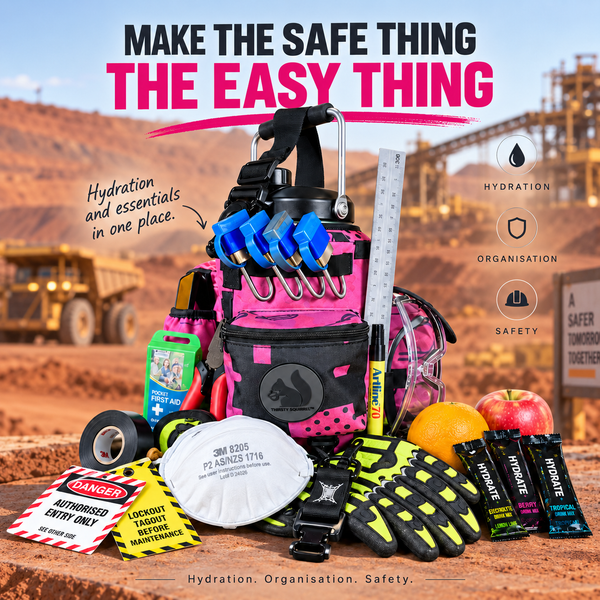
If workers already need to carry water, why couldn't that same system help them organise and access some of their other everyday essentials?
That's where our 3.8-litre hydration bottle and modular MOLLE and OG storage covers come in.
Not because we think we've solved every PPE problem.
Far from it.
But because we believe there's a better way to approach how everyday equipment is carried, stored and accessed.
We want to make it easier for workers to keep the gear they need close, without having to stuff everything into their pockets or leave it scattered around the worksite.
And we'd love to see more manufacturers, suppliers and safety professionals think beyond their individual products.
Maybe It's Time to Connect the Dots.
We're constantly talking about innovation in workplace health and safety.
New technology. Better equipment. Improved standards. Smarter systems.
But innovation doesn't always have to mean inventing something entirely new.
Sometimes it's about taking what we already have and making it work better together.
So here's a question for the safety industry.
Before we add another piece of equipment to a worker's mandatory kit, shouldn't we first ask how they're supposed to manage everything we've already given them?
Because giving someone all the right equipment is one thing.
Making it practical to use is another.
Thirsty Squirrel — The Smart Operator.
Make the safe thing the easy thing.

Shop the gear from this guide
Browse the Thirsty Squirrel products mentioned in this article.