How Much Water Should You Carry on a Hot Worksite?
05 May 2026
How Much Water Should You Carry on a Hot Worksite?
Hot worksites are no joke. Whether you are on a mine site, construction job, workshop, shutdown or outdoor project, water needs to be part of the plan before the day starts.
The exact amount of water you need depends on the conditions, your job, your body, your site rules and how much you are sweating. But one thing is simple: running out of water halfway through the day is a bad setup.
This is why a larger work bottle can make sense.
Why carrying enough water matters
When the day gets busy, hydration is easy to forget. You might plan to refill later, then the job changes, the work area moves or the refill point is not close.
A bigger bottle helps reduce that problem.
It gives you more water on hand and fewer reasons to delay drinking.
Small bottle vs large bottle
A small bottle can be easy to carry, but it often means more refills.
A large bottle is heavier when full, but it gives you more water ready to go.
For long shifts, hot days and remote work areas, many workers prefer having more water nearby rather than relying on perfect timing and convenient refill points.
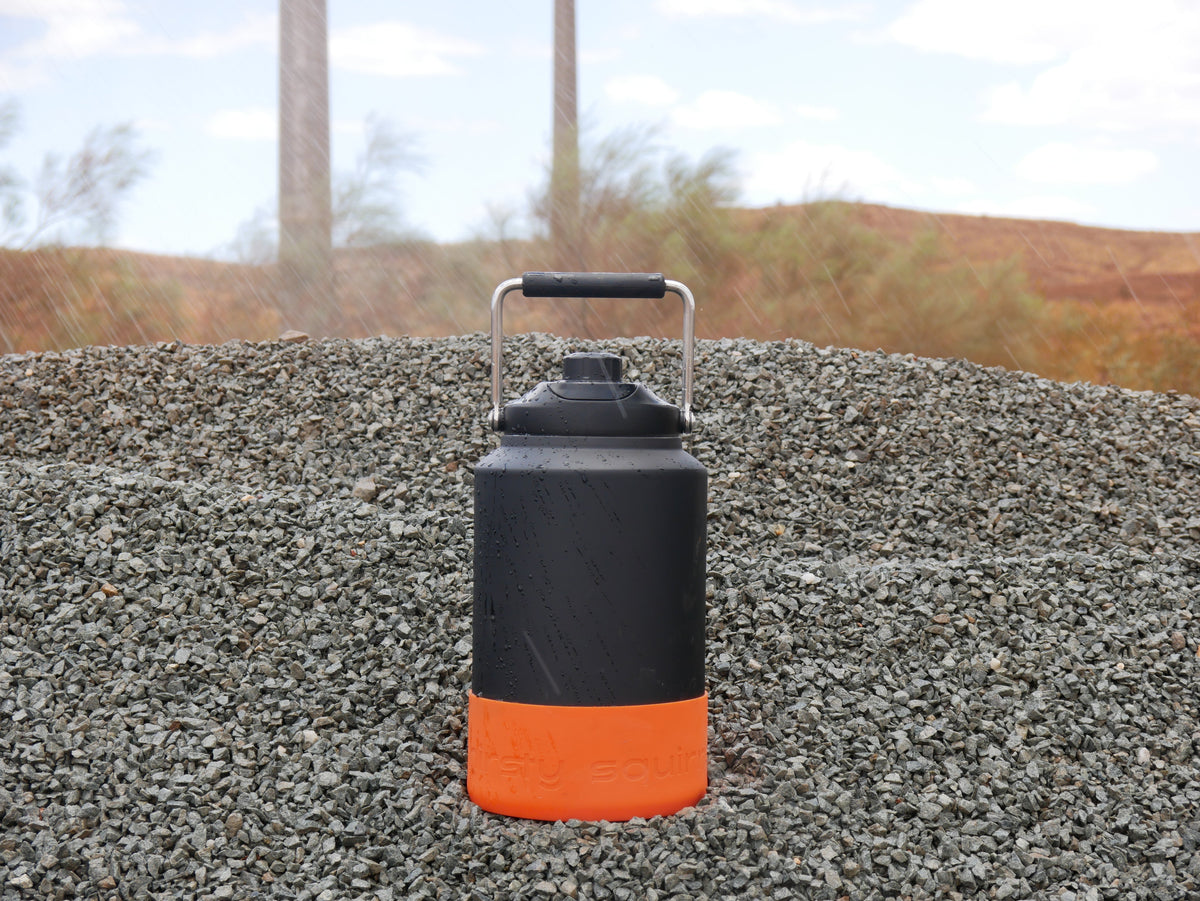
Why 3.8L is a useful size
A 3.8L bottle gives you a serious daily supply. It is big enough for long shifts, hot weather, camping, fishing, road trips and outdoor work.
It is not designed to disappear in a backpack. It is designed to be your main hydration station for the day.
For workers who like to prepare once and get on with the job, that makes sense.
Hydration is also about routine
Having a bottle is one thing. Using it is another.
Try building a simple routine:
-
Fill the bottle before leaving
-
Keep it visible
-
Drink before you feel thirsty
-
Use breaks as water checkpoints
-
Refill whenever you get the chance
-
Keep electrolytes handy if suitable for your work and health needs
The goal is to stay ahead, not catch up later.
Do not ignore site rules
Every site is different. Some workplaces have specific hydration policies, heat management rules, crib room procedures or PPE requirements.
Your gear should support those rules, not replace them.
If you are working in extreme heat or have health concerns, follow your workplace procedures and seek proper medical or safety advice.
Make the bottle part of your work kit
A good work bottle should be treated like your boots, gloves or glasses. It is not an optional extra. It is part of getting ready for the day.
That is why Thirsty Squirrel focuses on worksite hydration gear that is practical, visible and easy to build into your daily routine.
Final thought
So, how much water should you carry?
Enough that you are not relying on luck.
For many tradies, FIFO workers and outdoor crews, a large-capacity bottle is one of the simplest upgrades they can make to their daily kit.
Shop Thirsty Squirrel 3.8L bottles and worksite hydration gear built for long shifts and hot Australian conditions.
https://thirstysquirrel.com.au/collections/water-bottles

Shop the gear from this guide
Browse the Thirsty Squirrel products mentioned in this article.