Do you use and wear things you don't like?
29 July 2026
For decades, we've approached PPE in much the same way.
We identify the hazard.
We specify the required equipment.
We train people how to use it.
We tell them they must wear it.
And when compliance slips, we often assume the problem is with the worker.
But what if we've been asking the wrong question?
Instead of asking, "Why aren't people wearing their PPE?" perhaps we should be asking, "Have we given them PPE they actually want to wear?"
Think About Your Own Wardrobe
Here's a simple question.
When you open your wardrobe in the morning, do you reach for the clothes you don't like?
Probably not.
Most of us choose clothes that are comfortable, fit well and make us feel good. We spend money on shoes we like, sunglasses that suit us and watches that match our style. We naturally gravitate towards things we enjoy using.
Yet when it comes to PPE, we often expect people to wear whatever they're handed, regardless of how it fits, how comfortable it is or how it makes them feel.
Then we're surprised when compliance becomes a constant battle.
PPE Isn't Just About Protection
The primary purpose of PPE will always be protection.
That should never change.
But protection and usability don't have to compete.
If safety glasses are uncomfortable, they'll spend more time on hard hats than on faces.
If hearing protection is awkward to access, workers are more likely to tell themselves they'll only be exposed "for a minute."
If gloves reduce dexterity or feel bulky, they'll often come off as soon as the supervisor isn't looking.
Every one of these decisions makes sense from a human perspective—even if it increases risk.

We Often Underestimate the Risks We Can't See
Some hazards demand our attention immediately.
Nobody needs convincing that a moving conveyor, an exposed blade or a swinging load is dangerous.
The risk is obvious.
But what about the hazards that don't announce themselves?
Dust.
Noise.
Ultraviolet radiation.
Airborne contaminants.
These hazards rarely cause immediate pain or injury. Instead, they quietly build over months or years.
Because the consequences aren't immediate, our brains naturally discount the risk.
It's a normal human response.
That doesn't make the hazard any less real.
It simply means our risk controls have to work harder.
Compliance Shouldn't Depend on Willpower
Many safety systems still rely on one thing above all else:
People making the right decision every single time.
The problem is that humans don't work that way.
We're influenced by comfort.
Convenience.
Habits.
Peer behaviour.
Time pressure.
Confidence.
Even something as simple as whether we like wearing a particular piece of equipment can influence whether we reach for it without thinking.
If workers dislike their PPE, every shift becomes another negotiation.
Wear it.
Take it off.
Put it back on.
Leave it in the ute.
Forget it in the crib room.
That inconsistency creates a gap in your risk management system.
Better Design Creates Better Compliance
Imagine if PPE manufacturers started asking different questions.
Does this fit comfortably for a 12-hour shift?
Will workers actually enjoy wearing it?
Can they choose a style that suits them?
Does it feel like quality equipment instead of a disposable obligation?
These questions don't replace safety standards.
They complement them.
Because when people genuinely like using their equipment, compliance becomes easier.
Not because they're forced to.
Because they choose to.
Closing the Gap
At Thirsty Squirrel, we've always believed that safety equipment should be something people are happy to use—not something they can't wait to take off.
That's why we focus on products that don't just meet the required standards, but also remove the everyday barriers that reduce compliance.
Our Steezies Safety Glasses are designed to provide certified eye protection while offering styles people actually enjoy wearing. When workers feel comfortable and confident in their eyewear, they're far more likely to keep it on throughout the task rather than taking it off at the first opportunity.
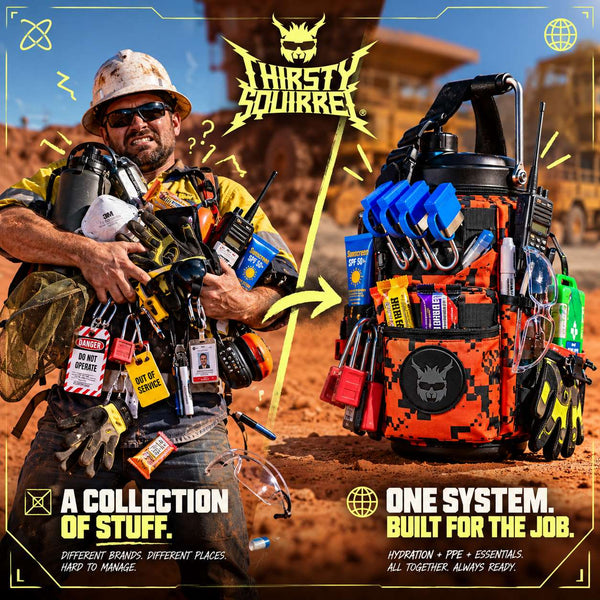
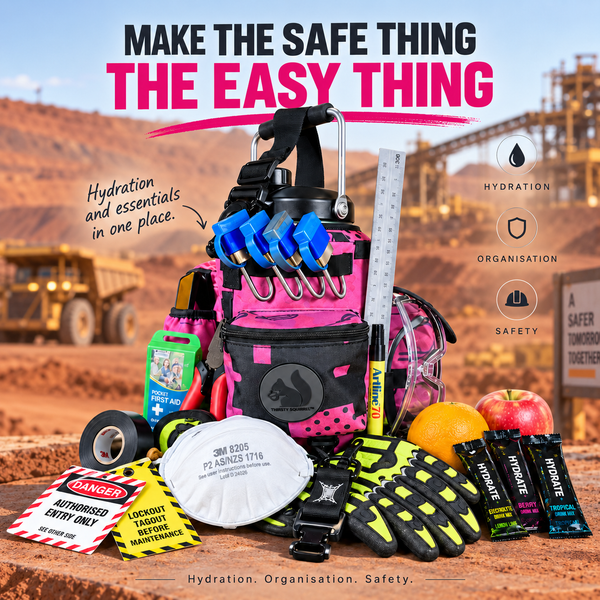
The same philosophy applies to our OG Cover and MOLLE Cover. By making frequently used PPE easier to carry, organise and access, they reduce one of the biggest barriers to compliance—convenience. When your safety glasses, hearing protection, gloves or lockout equipment are already within reach, doing the right thing becomes the easy thing.
The Bottom Line
Risk management isn't just about identifying hazards.
It's about understanding people.
If workers consistently avoid using PPE, we shouldn't automatically assume they don't care.
Sometimes the equipment is uncomfortable.
Sometimes it isn't convenient.
Sometimes it simply isn't something they want to use.
The best safety systems recognise that human behaviour is part of the risk assessment.
When we design PPE that people genuinely want to wear and make it easier to keep that equipment close by, we're not lowering standards.
We're improving the likelihood that the standards will actually be followed.
Because the best PPE in the world only protects people when it's being worn.

Shop the gear from this guide
Browse the Thirsty Squirrel products mentioned in this article.